

Table of Contents
- Why Does Cotton Dye Unevenly?
- Preparing the Fabric for Dyeing Cotton
- Dyeing Clothes in the Washing Machine vs. by Hand: Which Method to Choose
- Key Factors for Dyeing Cotton Evenly
- Step-by-Step Guide to Dyeing Cotton Evenly
- Set the color of the clothes after dyeing to ensure durability
- Troubleshooting Common Problems: Stains and Uneven Results
- Conclusion
Last updated: August 8, 2026
Why Does Cotton Dye Unevenly?
Uneven dyeing of cotton is one of the most frustrating problems for those new to DIY textile projects. Cotton absorbs dye selectively: some areas of the fiber become saturated quickly, while others remain pale, creating spots and streaks that ruin the final result.
The main cause of unevenness lies in the uneven distribution of the dye during immersion. If the fabric is not completely saturated with water before the dye is added, the dry fibers absorb the color faster than the wet ones. Without constant agitation, the dye settles at the bottom of the vat, leaving the upper portions undyed. Temperature plays an equally important role: cotton absorbs dye more effectively at controlled temperatures, and temperature fluctuations cause variations in dye saturation.
Preparing the Fabric for Dyeing Cotton
Preliminary Rinse and Pre-wash
Before dyeing, cotton must be thoroughly cleaned. New fabrics contain finishing agents, starch, and processing residues that create a water-repellent barrier. Rinse the garment under cold running water until the water runs clear. Next, wash the fabric in warm water with a mild detergent (no fabric softeners, which create a protective film) at about 40–50°C for 15–20 minutes. Rinse again until all soap is completely removed. If the fabric is very dirty, you can pre-treat it with water and white vinegar (about 50 ml per liter) for 10 minutes.
The Role of Pre-Soaking
After pre-washing, the fabric should be soaked in clean water for at least 30 minutes before adding the dye. This allows the fibers to absorb water evenly, eliminating air pockets that would cause uneven dye absorption. Keep the water at a temperature similar to the one you’ll use for dyeing to prevent uneven shrinkage or stretching.
Dyeing Clothes in the Washing Machine vs. by Hand: Which Method to Choose
Hand-dyed for precise results
Hand-dyeing offers maximum control over temperature, agitation, and dye distribution. You use a stainless-steel tub or a large enamel pot (never aluminum), and you can monitor every aspect of the process. With hand dyeing, you can maintain constant agitation and control the temperature precisely, keeping the vat at 60–70°C. The downside is the time required: a session demands 45–60 minutes of active attention.
Machine-washable dye for convenience
A washing machine offers convenience and consistent mechanical agitation. Many modern dyes are specifically formulated for use in a washing machine and will produce uniform results if you follow the instructions correctly. However, you have less control over the temperature, and the cycle may be too short for some dyes.
Key Factors for Dyeing Cotton Evenly
Water Quality and the Water-Fabric Ratio
Hard L, which is rich in minerals, interferes with dye absorption. If your water is very hard, consider using distilled or filtered water. The ideal water-to-fabric ratio is about 1:40 (40 liters of water per 1 kg of fabric). If you use less water, the dye becomes too concentrated and creates areas of oversaturation. To dye an average-sized garment, use at least 30–40 liters of water.
Continuous stirring and proper immersion
L is the most underestimated factor. Without constant movement, the dye settles due to gravity. During dyeing, the fabric must be agitated at least every 2–3 minutes for the first 20 minutes, then every 5 minutes. Proper L means the fabric must be completely submerged at all times. Use a wooden stick to push the fabric underwater and move it gently but constantly.
Temperature Control During Dyeing
The bath temperature must remain stable between 60–70°C for most cotton dyes. If it drops below 55°C, absorption slows down significantly. If it exceeds 80°C, you risk damaging the fibers. Use a thermometer to monitor the temperature and heat gradually, increasing it by about 5°C every 5 minutes until the target temperature is reached.
Step-by-Step Guide to Dyeing Cotton Evenly
Step 1: Set up your workspace
Choose a well-ventilated area near a sink and a heat source. You’ll need a stainless-steel tub or enamel pot (minimum capacity 40 liters), a kitchen thermometer, a wooden spoon, rubber gloves, a measuring cup, and filtered water. Cover your countertop with paper—the dye will stain permanently.
Step 2: Preparing the Dye Bath
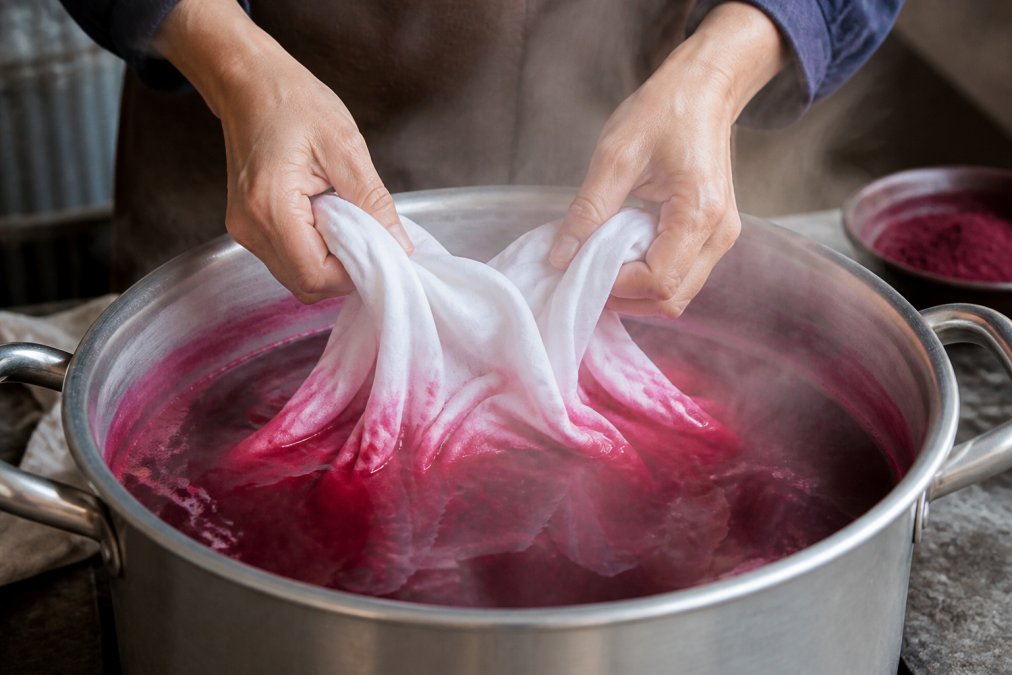
Fill the tub with water at about 40°C. Add the dye according to the manufacturer’s instructions (usually 1 packet per 500 ml of water) and stir well for 2–3 minutes. Gradually increase the temperature to 60°C over the course of 10 minutes, continuing to stir.
Step 3: Soaking the Fabric and Stirring
Once the tub has reached 60°C, slowly submerge the pre-soaked fabric. Make sure it is completely submerged and immediately begin agitating it with slow, steady movements. For the first 20 minutes, agitate every 2–3 minutes, lifting the fabric off the bottom and letting it fall back gently. Do not wring or twist it.
Step 4: Maintaining the Temperature and Dyeing Time
Keep the temperature at 60–70°C for the entire dyeing process. Most dyes require 45–60 minutes. Continue stirring every 5 minutes after the first 20 minutes.
Step 5: Proper Rinsing
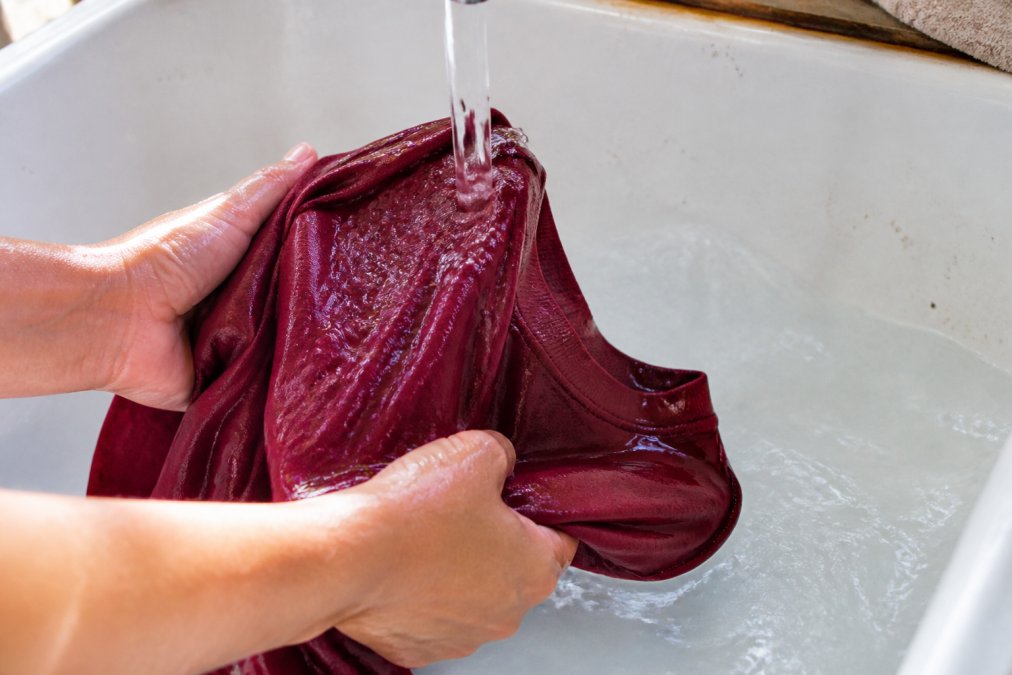
Remove the fabric from the tub using a wooden stick and place it in a colander. Let the excess water drain for 2–3 minutes. Fill the tub with water at 60°C and submerge the fabric again. Gently agitate for 5 minutes. Drain the water and repeat the process with progressively cooler water (40°C, then 30°C, then cold) until the rinse water runs almost clear.
Set the color of the clothes after dyeing to ensure durability
How to Use a Professional Fixative
A professional fabric fixative, such as Aybel Fiske, ensures superior color adhesion to the fabric fibers and significantly improves color fastness. You can apply the product during or after the final rinse. Fill a container with water at 40°C, add the fixative according to the instructions, submerge the freshly rinsed fabric, and let it soak for 15–20 minutes, gently agitating it every 5 minutes.
Drying
Do not rinse the fabric again after using the fixative. Let the fabric drip dry and gently squeeze it to remove excess water. Alternatively, you can spin-dry the fabric at a low speed. Hang the fabric to dry in a well-ventilated area away from direct sunlight. Do not put the fabric in the dryer immediately after dyeing. Wait at least 24 hours before washing the garment for the first time, using cold water and a mild detergent.
Troubleshooting Common Problems: Stains and Uneven Results
Causes of Stains and How to Prevent Them
Blotchiness is caused by uneven dye absorption. The main causes are: fabric that has not been pre-soaked (solution: pre-soak for at least 30 minutes), insufficient agitation (solution: agitate every 2–3 minutes for the first 20 minutes), an overloaded batch (solution: use the correct water-to-fabric ratio of 1:40), and fluctuating temperature (solution: monitor and maintain a stable temperature of 60–70°C).
Streaks and uneven fading
Streaking is usually caused by creases in the fabric during dyeing. Make sure the fabric is completely unfolded and free to move. Uneven fading after washing indicates that the fixative was not applied correctly or that the fabric was not rinsed thoroughly enough. Use a professional fixative such as Aybel’s Fiske Fixative and repeat the rinsing cycle until the water runs completely clear.
Dyeing blended fabrics and synthetic blends
Blended fabrics—such as cotton blended with polyester, nylon, or other synthetics—are more difficult to dye evenly because synthetic fibers absorb dye differently than cotton. For fabrics with a high synthetic content, use dyes specifically formulated for blended fibers. Aybel offers dyes that work well on cotton, wool, silk, linen, viscose, bamboo, and polyamide (nylon).
| Fabric Type | Dye Absorption | Recommended dyeing time | Ideal temperature |
|---|---|---|---|
| 100% cotton | Excellent | 45–60 minutes | 60–70°C |
| Cotton/Linen | Excellent | 45–60 minutes | 60–70°C |
| Cotton/Viscose | Good | 50–65 minutes | 60–70°C |
| Cotton/Nylon | Moderate | 60–75 minutes | 60–70°C |
| Cotton/Polyester | Poor | Not recommended | Not recommended |
| 100% Wool | Excellent | 40–50 minutes | 50–60°C |
| 100% Silk | Excellent | 30–45 minutes | 50–60°C |
Dyeing cotton evenly is not some mysterious art; it’s simply a matter of following the physical and chemical principles that govern dye absorption. Proper preparation, constant agitation, temperature control, and the use of a professional dye fixative transform a frustrating process into a predictable and satisfying one.
If you're new to fabric dyeing, start with small, simple items. As you gain confidence, you can move on to more complex projects. With Aybel products and the techniques described in this guide, you'll achieve professional-looking results that will breathe new life into your favorite garments.
For best results, invest in a high-quality settingspray likeAybel’s Fiske Setting Spray—just €4.99—it’s the finishing touch that turns a good result into an excellent one. Aybel’s complete line of hair dyes, available in colors such as Pink, Bright Lilac, and Melon Orange, lets you experiment with endless color combinations while always maintaining the uniformity you desire.


Frequently Asked Questions
How can I dye cotton evenly without leaving any streaks?
The key is proper fabric preparation, continuous agitation, and the right ratio of water to fabric. Pre-wash the cotton, submerge the garment completely in the dye bath, and agitate constantly for the first 15–20 minutes. Maintain a stable temperature and ensure that the fabric remains completely submerged at all times. A professional fixative such as Aybel Fiske ensures even color and long-lasting results.
What is the difference between machine dyeing and hand dyeing?
Hand dyeing offers greater control over agitation, temperature, and soaking time, resulting in more uniform colors. Machine dyeing is more convenient for bulky garments but can lead to uneven results if the garment does not move freely. For cotton, hand dyeing ensures a more even color distribution and better color saturation.
How do I prepare the cotton fabric before dyeing it?
Rinse the cotton with lukewarm water to remove dirt and residue. Pre-wash it with a mild detergent, then soak the garment in lukewarm water for 30 minutes before dyeing. This process, called scouring, opens up the cotton fibers and allows the dye to penetrate evenly. Damp fabric absorbs dye more evenly than dry fabric.
How can you set the color after dyeing to prevent it from fading?
After dyeing, rinse the garment in cold water until the water runs clear. Then use a professional dye fixative such as Aybel Fiske, available for both hand-dyeing and machine-dyeing. The fixative creates a chemical bond between the dye and the cotton fibers, ensuring superior color fastness. Finally, air-dry the garment and wash it separately the first few times.
This article was written using GrandRanker